

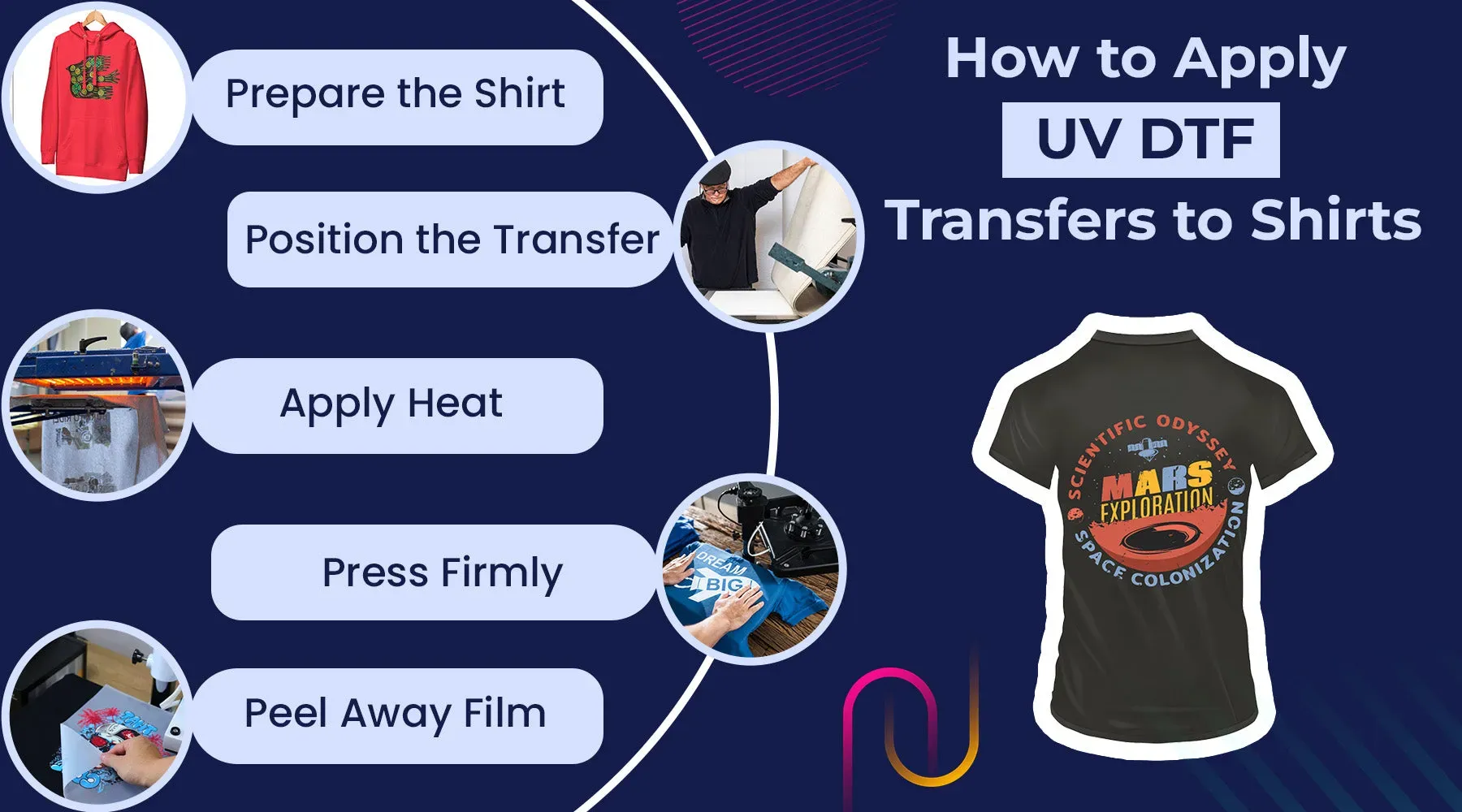
UV DTF Transfer blends the versatility of DTF (direct-to-film) with UV-curable inks to produce vibrant, durable transfers on a wide range of substrates. This approach is popular for apparel, hard goods, and promotional items, and you’ll notice differences when comparing DTF vs UV transfer in color, durability, and workflow. When you start with UV DTF printing, you’ll benefit from a streamlined UV DTF transfer workflow that reduces waste and improves color accuracy. If you’re new to the process, this guide shares quick DTF transfer tips and best UV DTF transfer results to help you optimize outcomes. By aligning design, substrate, and curing settings within an efficient DTF transfer workflow, you can scale production while preserving detail and wash-fast durability.
Viewed through an alternative lens, the technique is a UV-curable direct-to-film process that prints designs onto a transfer film before applying heat and pressure to fabrics or other substrates. This terminology aligns with broader concepts like UV ink curing, film-based transfers, and on-demand textile printing. From an LSI perspective, you’ll encounter terms such as UV printing on substrates, film-to-fabric transfer, and rapid cure signaling the same underlying method. Understanding substrate compatibility, ink chemistry, surface energy, and heat-press dynamics helps bridge traditional DTF methods with modern UV workflows. In practice, the goal remains clear: crisp color, strong adhesion, and efficient production, regardless of what name you use for the process.
Understanding UV DTF Transfer
UV DTF Transfer blends the versatility of direct-to-film with UV-curable inks to create vibrant, durable transfers on a wide range of substrates. This approach prints onto a transfer film using UV-curable inks and then uses heat and pressure to transfer the design from film to fabric, ceramic, wood, or other materials. The result is sharper details, smoother gradients, and improved color fastness compared with some traditional inks.
For beginners, the key is to master media compatibility, proper curing, and bonding with the chosen substrate. Understanding UV DTF printing and how the DTF transfer process locks color quickly helps you plan a reliable workflow. As you explore the differences between UV inks, film coatings, and heat-press steps, you’ll gain a clearer view of how to achieve consistent results and reduce waste.
Tools, Materials, and Setup for Consistency
A reliable setup supports consistent UV DTF transfer results. You’ll need a printer configured for UV DTF printing with UV-curable inks or a DTF-enabled printer paired with compatible UV inks, along with a transfer film designed for DTF-style transfers. These components influence ink density, cure quality, and edge sharpness—the core factors behind good UV DTF printing.
Other essential items include a heat press with even heat distribution and adjustable time settings, protective layers like Teflon or silicone sheets, and cleaning/calibration tools (isopropyl alcohol, lint-free wipes, nozzle maintenance swabs, and color calibration targets). Planning your workflow around these tools helps ensure that your UV DTF transfer workflow remains predictable and efficient.
Designing for Color Accuracy and Substrate Compatibility
Begin with high-resolution artwork (300+ DPI) and plan for color accuracy and soft-proofing to anticipate on-garment results. Consider color management, proper ICC profiles, and potential mirroring if your process requires it. This preparation aligns with the broader concept of UV DTF printing, where color fidelity and smooth gradients matter for optimum transfer outcomes.
Document substrate compatibility early and perform small test prints on each material you intend to use. Different fabrics and hard surfaces absorb ink differently, affecting vibrancy and adhesion. By testing substrates and refining your design setup, you’ll move toward more predictable UV DTF printing results and minimize surprises in production.
The UV DTF Transfer Workflow: A Step-by-Step Approach
The UV DTF transfer workflow begins with design preparation, followed by substrate testing, film/ink compatibility checks, and curing verification. Once prepared, print onto the transfer film, ensure artwork is correctly oriented (including mirroring if needed), and then cure before transferring with heat and pressure. This structured approach helps you achieve consistent, high-quality results.
Next comes the actual transfer: apply heat and pressure using a suitable heat press, then handle the item with care to prevent smudging. Throughout the workflow, monitor curing completeness, edge sharpness, and overall color density to ensure optimal UV DTF transfer results. By following these steps, you’ll align your practices with established techniques in UV DTF printing and transfer.
Achieving Best UV DTF Transfer Results: Techniques and Tips
To reach best UV DTF transfer results, run deliberate test prints on your most-used substrates and document temperature, time, and pressure settings for future projects. Build a library of samples to reference when planning new designs, and use calibration patches to maintain color accuracy without guesswork.
Calibrate your equipment regularly, clean printheads and UV curing lights, and inspect the heat press for even heat distribution. A stable environment—consistent temperature and humidity—also helps maintain predictable results. Collect feedback from end-users and adjust your workflow to improve adhesion, color fidelity, and overall durability.
DTF vs UV Transfer: Choosing the Right Path for Your Project
When deciding between DTF transfer and UV DTF transfer, consider the project’s substrate compatibility, required durability, and production speed. Traditional DTF methods often rely on powder adhesion and post-processing, while UV-driven processes can deliver quicker cure and cleaner results on a broader range of surfaces.
Understanding the differences between DTF vs UV transfer helps you tailor your approach. Evaluate ink chemistry, film compatibility, curing requirements, and heat-press parameters to determine which method best meets your needs. For teams seeking practical tips, refer to common DTF transfer tips and test thoroughly to select the right workflow for your project.
Frequently Asked Questions
What is UV DTF Transfer, and how does it relate to UV DTF printing?
UV DTF Transfer combines UV-curable inks with a transfer film to move a design onto fabrics or other substrates via heat and pressure. It’s closely tied to UV DTF printing, which describes printing on the transfer film before transfer. This approach delivers vibrant color, sharp detail, and strong adhesion when curing and substrate compatibility are properly managed.
What are the essential DTF transfer tips for achieving the best UV DTF transfer results?
Follow these DTF transfer tips: use a printer configured for UV DTF printing, test on each substrate, confirm film and ink compatibility, cure fully before transfer, mirror artwork when required, and optimize heat press settings (temperature, time, pressure). Proper handling during the transfer helps achieve best UV DTF transfer results.
How does the UV DTF transfer workflow affect color accuracy and durability?
A structured UV DTF transfer workflow—covering design prep, substrate testing, film/ink checks, curing, and heat pressing—improves color accuracy and adhesion. Use color management, ICC profiles, and calibration targets to maintain fidelity, and ensure complete curing to maximize durability and wash fastness.
DTF vs UV transfer: which method delivers sharper results with UV DTF transfer?
DTF vs UV transfer comparisons show UV DTF transfer often delivers faster curing and brighter colors due to UV inks, with sharper detail when film selection and curing are optimized. The choice depends on project needs, substrate, budget, and desired durability; UV DTF transfer can reduce post-processing compared to traditional DTF.
What substrates work best with UV DTF printing and UV DTF transfer?
UV DTF printing can work on light and dark fabrics, blends, and certain hard surfaces when using the right transfer film and UV inks. Always test each substrate for absorption, adhesion, and color vibrancy, and consider pretreatment for challenging fabrics or surfaces.
What are common pitfalls and troubleshooting steps to achieve best UV DTF transfer results?
Common issues include color mismatch, poor adhesion, edge halos, smudging, and uneven heat. Troubleshoot by calibrating color, verifying curing, adjusting heat and pressure, ensuring film/ink compatibility, and performing small test runs to refine the workflow toward best UV DTF transfer results.
| Key Point | Summary | Notes |
|---|---|---|
| What UV DTF Transfer is and its benefits | A modern method combining UV-curable inks with direct-to-film transfer to produce vibrant, durable transfers on a variety of substrates. | Foundation concept |
| Distinctive features | UV-curable inks, rapid color locking, sharper details, and improved color fastness relative to some traditional inks | Key advantages |
| Essential tools and setup | Printer with UV DTF capability, UV inks, transfer film, heat press, protective layers, substrates, optional powders, cleaning and calibration tools | Equipment readiness |
| Workflow planning | A well-defined UV DTF Transfer workflow minimizes trial-and-error and reduces rejects, improving consistency | Process efficiency |
| 10-step beginner checklist (highlights) | Design prep, substrate testing, film/ink compatibility, curing, print quality checks, mirroring/layout, powder/adhesion, heat-press settings, pressing technique, post-transfer care | Execution guidance |
| Common pitfalls & troubleshooting | Color mismatch, poor adhesion, bleeding/edge halos, smudging/ghosting, uneven heat; addressed via proper curing, calibration, substrate prep, and checking film/ink compatibility | Quality control |
| UV DTF Transfer vs other methods | Compared to standard DTF, UV DTF Transfer offers fast curing, vibrant color, and broad substrate compatibility; consider ink chemistry, film, curing, and heat-press steps when choosing method | Decision factors |
| Maintenance & optimization | Regular printhead checks, calibration, stable environment, storage controls, and documentation to reproduce consistent results | Sustainability |
Summary
UV DTF Transfer offers a powerful path to vibrant, durable transfers across a range of substrates. By following a beginner’s checklist that covers planning, tool selection, curing, heat pressing, and troubleshooting, you can build a reliable UV DTF printing workflow. With consistent curing, precise heat settings, and proper film compatibility, you’ll achieve sharper details, color fidelity, and faster production. Ongoing calibration and workflow optimization will help you reproduce consistent results, reduce waste, and deliver high-quality UV DTF Transfer results for diverse projects.