

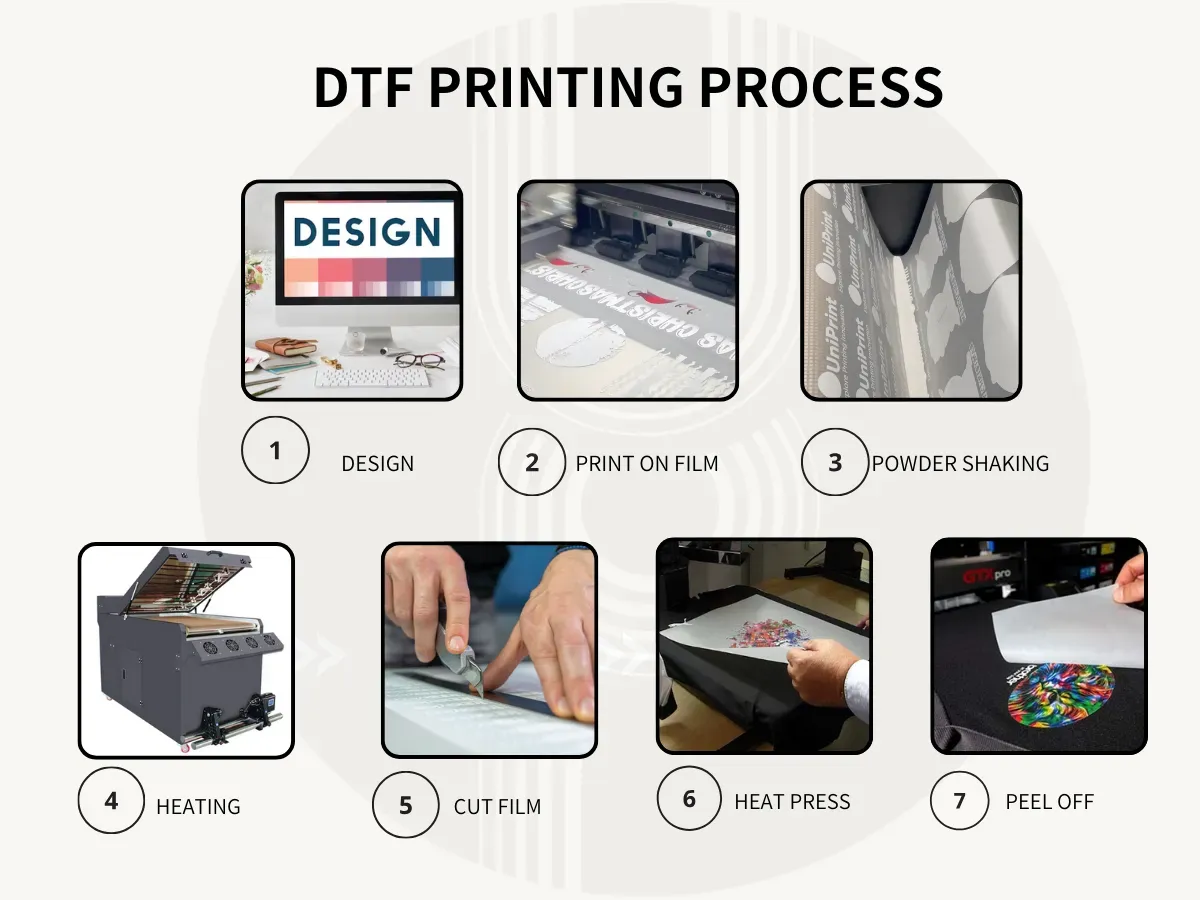
DTF Printing has surged in popularity as a versatile, consumer-friendly method for transferring designs onto fabrics, offering bold color, durable bonds, and a workflow that beginners can master without the steep learning curve of traditional screen printing. If you’re a beginner curious about how to get crisp, long-lasting prints on T-shirts, hoodies, bags, and more, this guide on direct-to-film transfers will help you start confidently. This overview explains what DTF printing is and why it’s appealing for both hobbyists and small businesses, while outlining essential materials and a practical, repeatable workflow you can adapt to your setup. A reliable setup and careful material choices—such as ink quality and transfer film selection—are important to achieving consistent results across fabrics. By the end, you’ll be ready to produce vibrant transfers with confidence.
In practice, DTF transfers offer a film-based garment decoration method that uses a clear transfer film, a white underbase, and a heat-press to bond vivid imagery. This approach is scalable from single designs to small runs, blending creativity with efficient production so creators can respond quickly to demand. If you’re exploring options for DIY apparel projects or growing a small shop, this method provides flexibility, cost-efficiency, and repeatable results without the constraints of traditional setup.
DTF Printing Explained: How Direct-To-Film Transfers Work
Direct-To-Film (DTF) Printing is a garment decoration method that prints designs onto a clear transfer film using a capable printer with white and color inks. After printing, a bond-promoting powder is applied and cured so the design can be heat-pressed onto a fabric. The result is a vibrant, durable transfer that can reproduce crisp edges and gradients on a variety of fabrics, including dark materials, while offering lower setup costs for small runs compared to traditional screen printing.
DTF transfers, also called direct-to-film transfers, combine the flexibility of digital artwork with the robustness of a film-based transfer. This approach is particularly appealing to hobbyists and small businesses because it supports short runs, rapid changes in design, and simpler inventory management. Properly executed, DTF printing delivers print quality that rivals screen-printed graphics without the same level of upfront investment.
DTF Film Types and Their Effect on Color and Durability
DTF film types play a pivotal role in ink adhesion, transfer brightness, and wash durability. Different carrier layers, coatings, and surface finishes influence how the white underbase and color layers interact with the fabric. Selecting the right film type is essential for achieving consistent color vibrancy, sharp details, and reliable adhesion across varying garment substrates.
Testing multiple DTF film types with your printer setup helps you understand which films offer the best balance of opacity, tack, and release characteristics for your typical fabrics—ranging from 100% cotton to cotton blends and some poly blends. By building a small library of films, you can tune your DTF printing workflow to deliver predictable results across different runs and customers.
DTF Printer Setup: Essential Steps for Beginners
A solid DTF printer setup starts with a printer configured for white ink capability, reliable color management, and compatible software. Ensure your ink system, maintenance schedule, and profiles are aligned with the transfer film you plan to use. Establish baseline settings for head alignment, nozzle checks, and color calibration to minimize surprises during production.
Next, optimize your workflow by configuring print profiles that account for white underbase opacity, color layer separation, and the final film handling. Regular maintenance—such as daily cleaning routines, using high-quality inks, and verifying media feeds—helps prevent common printing defects like banding or misregistration that can undermine the final transfer.
DTF Printing Workflow: A Step-By-Step Path from Design to Finish
A clear DTF printing workflow guides you from artwork to a finished transfer. Start with artwork prepared for the white underbase and final color layers, and ensure the design fits the chosen garment. Use color management to translate on-screen colors accurately to the white underbase and subsequent color layers before printing on the transfer film.
After printing, apply the adhesive bonding powder while the film is still tacky, cure the powder, and then prepare the film for transfer. Use a heat press at the recommended temperature, time, and pressure for your film and fabric type, with appropriate peel methods. A well-defined DTF printing workflow reduces errors and yields consistent, repeatable results.
Troubleshooting and Optimization for Reliable DTF Transfers
Even with a disciplined workflow, you may encounter issues such as white ink not producing solid coverage, powder clumping, or color shifts. Diagnose problems by reviewing print samples, rechecking color profiles, and testing different film types or powders. Document the conditions that yield the best results to build a reliable reference library for future runs.
Optimization also involves fabric-specific adjustments, post-press care, and long-term monitoring of adhesion and wash durability. Fine-tuning heat press temperature and duration, ensuring a clean substrate, and testing with multiple fabrics help you maintain consistent outcomes across orders and reduce returns or complaints about quality.
Frequently Asked Questions
What is DTF Printing and how do DTF transfers work on fabric?
DTF Printing is a garment decoration method where a design is printed onto a clear transfer film using a printer with white and color inks. After printing, a bonding powder is applied and cured, and the film is heat-pressed onto fabric to create a transfer. DTF transfers work on a wide range of fabrics, including dark textiles, delivering vibrant color with relatively low setup for small runs. This approach is beginner-friendly and well suited for T-shirts, hoodies, and bags.
How do DTF transfers compare to sublimation or DTG within a DTF printing workflow?
DTF transfers are generally more cost-efficient for short runs and require less setup than traditional screen printing. They can reproduce complex multi-color designs with gradients and print on many fabrics, with strong wash durability when properly cured. In a DTF printing workflow, you print on film with a white underbase, cure the powder, and press the design onto the garment, offering flexibility compared with sublimation or direct-to-garment (DTG) methods.
What materials are essential for starting DTF Printing, and how do DTF film types affect results?
Essential materials for starting DTF Printing include a DTF printer with white ink capability, a DTF ink set, DTF transfer film, bonding powder, a curing oven or heat tunnel, a heat press, and design software. DTF film types vary in finish and adhesive compatibility, and choosing the right film can affect ink adhesion, color vibrancy, and transfer reliability.
What is the best DTF printer setup and what are key steps in the DTF printing workflow for consistent results?
For the DTF printer setup and workflow, prepare artwork with color management, select a film-compatible print profile, and print the white underbase first if required. Print the color layers on the transfer film, apply bonding powder while the print is tacky, cure the powder, and transfer the image to fabric at the recommended temperature, time, and pressure. Fine tune through test prints and calibrations to maintain a consistent DTF printing workflow.
What are common challenges with DTF transfers and how can you troubleshoot them in the DTF printing workflow?
Common challenges with DTF transfers include white ink coverage issues, powder clumping, color shifts, poor adhesion, and fabric compatibility. Troubleshooting tips: adjust white underbase density and opacity, ensure even powder application, recalibrate color profiles, verify press temperature and pressure, and test on representative fabrics to adapt the workflow.
| Aspect | Key Points | Notes |
|---|---|---|
| What is DTF Printing? |
|
|
| DTF vs Other Methods |
|
Consider workflow, maintenance, and material limitations. |
| Essential Materials |
|
Quality and compatibility matter; test settings first. |
| Workflow Overview |
|
Follow supplier guidance for film and ink settings. |
| Common Challenges |
|
Use calibration prints and fabric-specific tests. |
| Starting Tips |
|
Documentation helps reproduce successful results. |
Summary
DTF Printing offers a flexible, high-quality path to garment decoration. This descriptive overview highlights how DTF Printing works, the materials involved, and a practical workflow that supports small runs and on-demand orders. With careful calibration, proper powders and curing steps, and attention to fabric compatibility, beginners and small businesses can achieve vibrant, durable prints on tees, hoodies, bags, and more. DTF Printing thus provides an approachable, scalable option for creative projects and product lines.